Executives Make Enough Decisions Already. So Do Their Assistants.
By: Urbanride • July 7, 2026
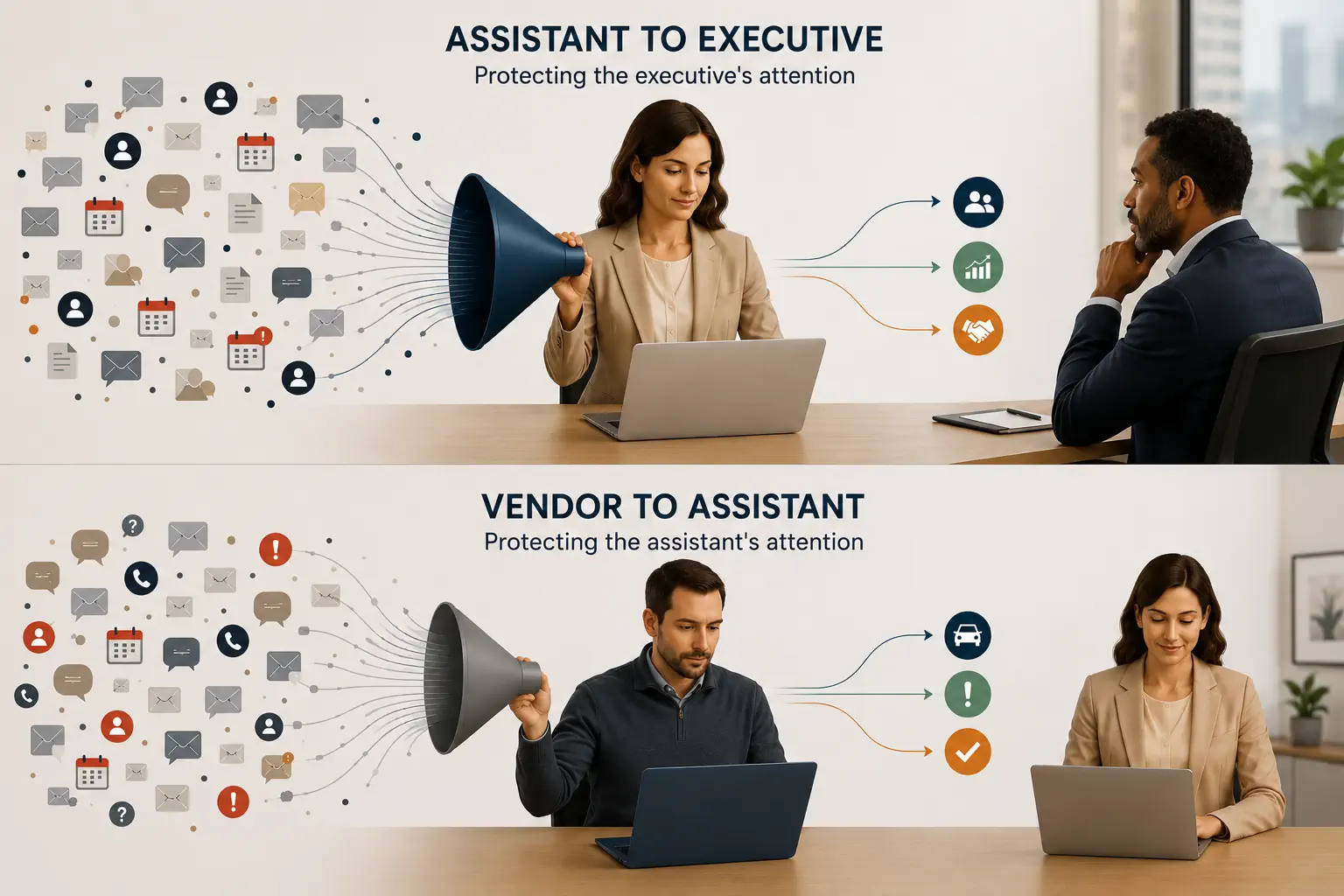
One of the most valuable – and least visible – parts of an executive assistant’s role is deciding which decisions should never become their executive’s problem.
Every EA spares their executive from countless decisions they’ll never even realize existed. Which meeting can absorb an interruption without being derailed? Can this request wait until tomorrow? Do we need to involve anyone else to resolve this issue quietly?
A central part of leader support is ensuring that the decisions reaching an executive are the ones that genuinely merit their attention and require their judgment.
Personalization is not endless customization. It’s the product of accumulated understanding. That’s what EAs provide when they remember routines, recognize preferences, and anticipate needs. The goal is not to offer more choices – it’s to eliminate unnecessary ones.
Over the years, we’ve had the privilege of working alongside EAs who invest enormous time and energy in reducing unnecessary decisions for the leaders they support. We’ve also noticed that too many vendors unknowingly create unnecessary decisions for those same EAs. That strikes us as odd: if EAs work to protect an executive’s attention, shouldn’t the people supporting EAs work to protect theirs?
That observation has shaped how we think about our own role. Ground transportation presents countless opportunities to increase or decrease cognitive load. Trip-specific details require active communication – timing, locations, passenger count, luggage, and security considerations, to name a few.
But other details should become more familiar over time. Does the traveler prefer texts or calls? Are there airport or pickup routines that tend to recur? Are there vehicle expectations that can be anticipated unless a particular trip suggests otherwise?
A great partner distinguishes between what needs to be decided today and what has already been learned. The service does not become automatic – it becomes increasingly informed. New variables still surface, but stable preferences become part of a shared understanding.
When plans change, as they inevitably do, that shared understanding guides the response. Only decisions requiring fresh judgment surface to the people who need to make them. Everything else is quietly absorbed. By reducing the communication that no longer needs to happen, there’s more room for the communication that does.
EAs spend their careers removing unnecessary decisions from someone else’s day. The partners in their ecosystem should do the same for them.